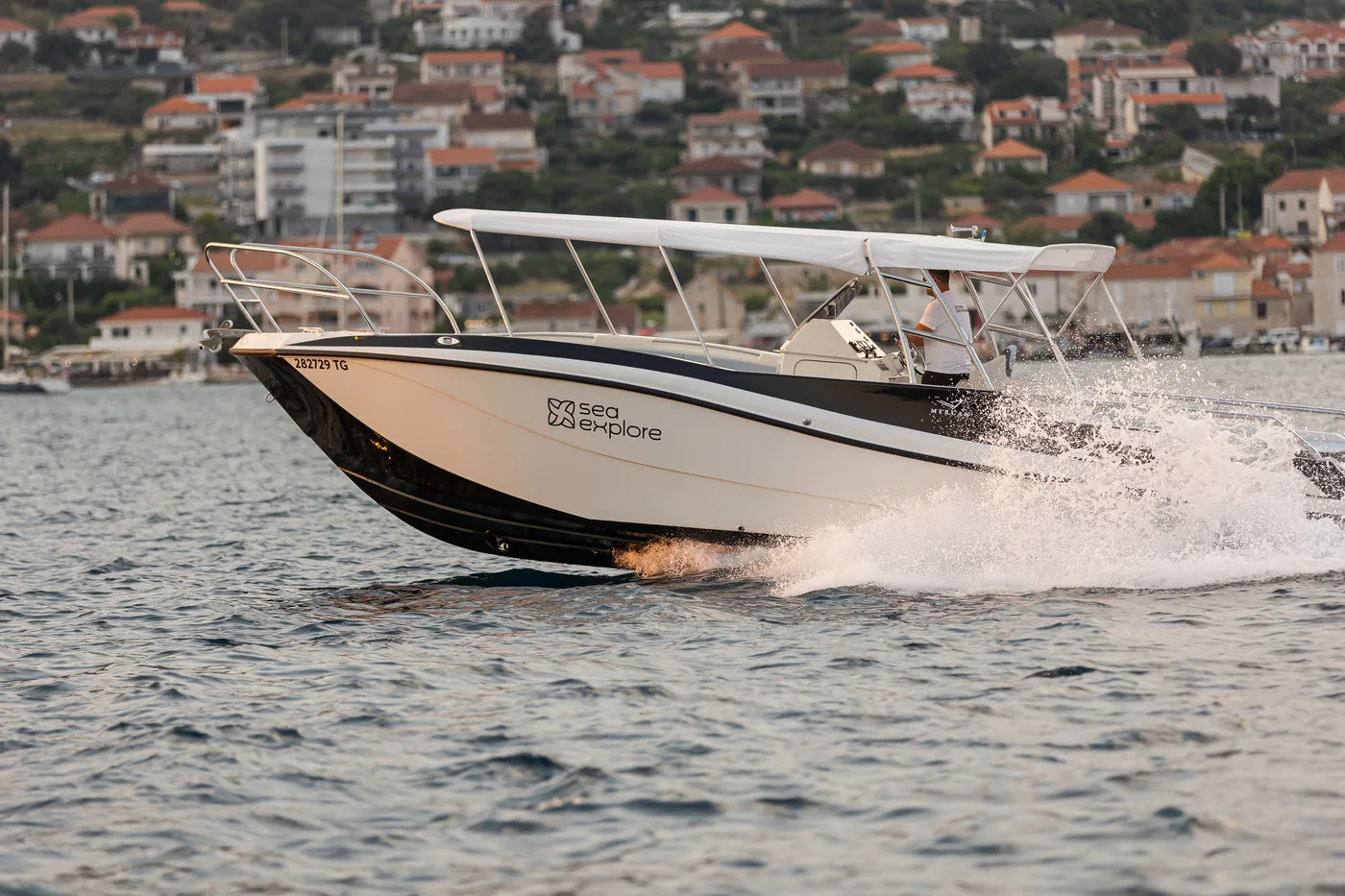
The sea around Trogir is some of the clearest in the Adriatic, and most of the best snorkeling lies within half an hour by boat. The catch is that the top spots are on islands, so how you get there matters as much as where you go. This guide covers the spots worth your time, what lives below the surface, when conditions are best and how to snorkel gently in a sea that protects some fragile species.
The Blue Lagoon: best for first-timers
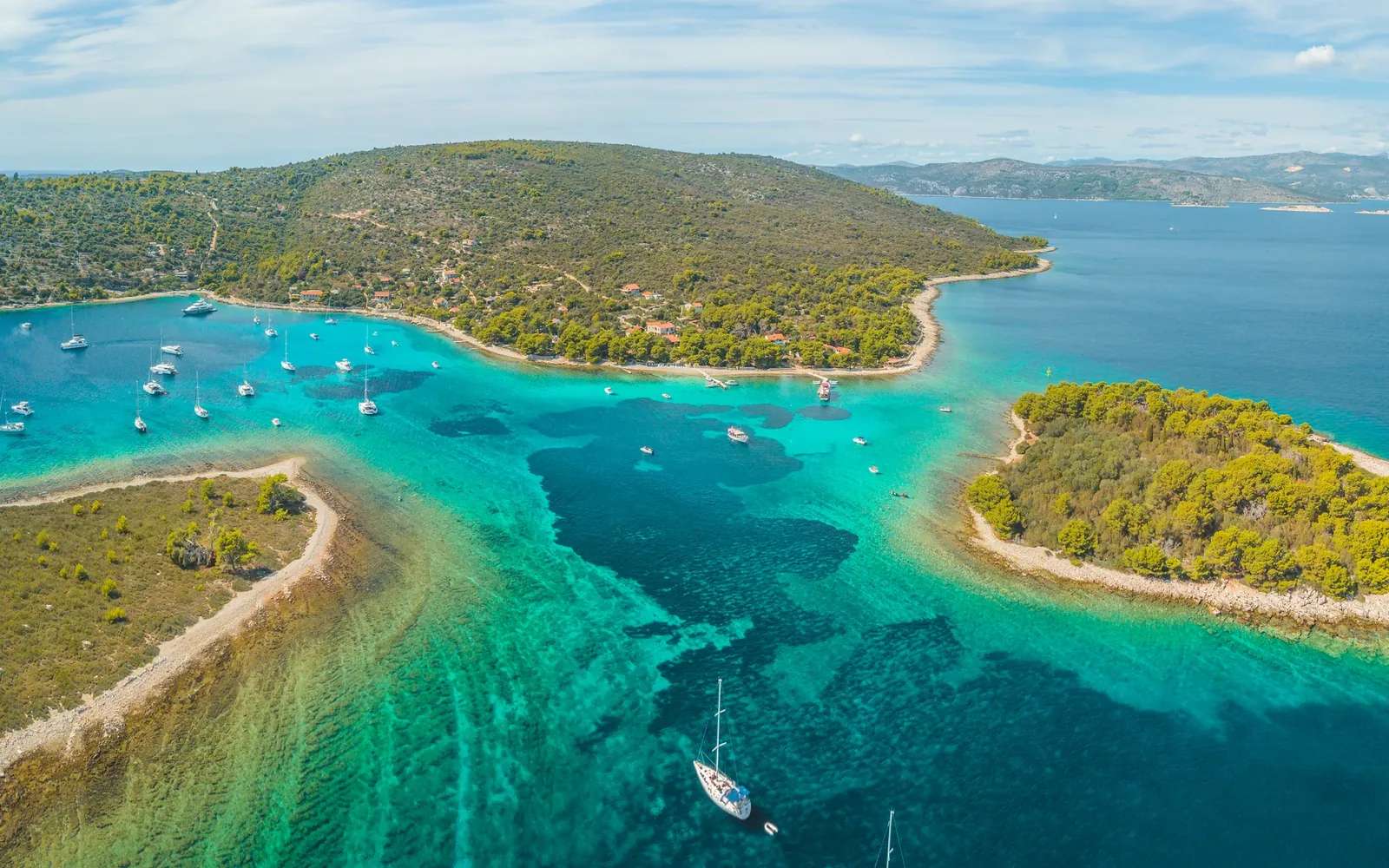
The Blue Lagoon is a shallow, sheltered bay between Drvenik Veli and the Krknjaš islets, about 30 to 40 minutes by speedboat from Trogir. A bright sandy seabed, little current and water often only a few metres deep make it the easiest place in the area to snorkel for the first time, children included. Expect small fish over the sand, sea cucumbers and the occasional starfish, with more life along the rocky edges of the islets. It is also the busiest spot, so go in the morning if you can. Our Blue Lagoon guide covers the trip itself.
Labadusa bay on Čiovo: quieter and closer
Labadusa is a sheltered bay on Čiovo, the island joined to Trogir by a bridge. The water is calm and clear, with a pebble shore and rocky edges where fish gather. Being close to Trogir, it makes a relaxed last swim of the day, and the beach bar ashore is handy for a cold drink afterwards.
Maslinica and the Šolta coast: rocks, islets and more fish
Maslinica is a harbour village on the western tip of Šolta, facing a cluster of small islets. Rocky coast like this usually holds more marine life than sand. Look for small shoals of bream, colourful wrasse and damselfish, and in the cracks between rocks the odd octopus. On our half-day tour Maslinica is the lunch stop, while the private Drvenik & Šolta day leaves time for longer swims along Šolta's quieter bays.
Snorkeling from the shore
Without a boat, the easiest option is the rocky coast of Čiovo around Okrug Gornji, a short bus or taxi ride from Trogir. Get in from a pebble beach rather than off the rocks, stay close to the shore and watch for passing boats. Shore snorkeling is good, but the island spots are usually clearer and have more to see.
What you will see underwater
- Seagrass meadows of Posidonia, the green underwater fields that shelter young fish
- Small shoals of damselfish, bream, wrasse and salema
- Sea urchins, starfish and sea cucumbers on rock and sand
- Octopus hiding in cracks, if you move slowly and look closely
- Noble pen shells (Pinna nobilis), large upright clams that are now critically endangered
When to go
The snorkeling season runs from May to October. The sea is around 18 to 21°C in May, reaches the mid-20s in July and August and stays warm into late September, which many people find the best month: warm water, fewer boats and excellent visibility. Within a day, mornings are best. The wind in the channels usually builds in the afternoon and ruffles the surface, while the early hours are calm and clear.
What to bring
- A well-fitting mask. Ours are on board on every tour, so bring your own only if you prefer it
- Water shoes for rocky entries and sea urchins
- Reef-safe sunscreen, or better, a rash vest for long sessions face down in the sun
- Fins if you have them. They help on longer swims but are not needed in shallow bays
- A towel and a dry layer for the ride back
Snorkel safely, and gently
Stay within sight of your boat or the shore and look up every few minutes, because small boats pass through every bay in summer. Do not stand on rocks covered in sea urchins, and never touch or move a noble pen shell: the species is strictly protected in Croatia, and handling or taking one, alive or dead, is forbidden. Treat the seagrass the same way and swim over it without pulling it. Jellyfish turn up in some summers, and at every stop our crew will tell you whether it is a good moment to swim.
Snorkeling on a SeaExplore tour
Our half-day boat tour from Trogir stops at the Blue Lagoon and Labadusa bay for swimming and snorkeling, with a lunch stop in Maslinica on Šolta. It costs €60 (price on 10.09.2026.: €60) per person, with snorkeling masks, water and a welcome drink included. For your own pace, the private half-day tour is €680 (price on 10.09.2026.: €680) per boat for up to 12 guests: the same three stops with the whole boat to yourselves, staying as long as you like at each.
Quick answers
Where is the best snorkeling near Trogir?
Can you snorkel in the Blue Lagoon?
Do I need my own snorkeling gear?
When is the water warm enough for snorkeling?
Is snorkeling near Trogir safe for children?
Plan a trip from this guide
Tell us your dates and we’ll plan the trip with you. Inquiry only, no payment now.